The AI Superpower You’re Not Hearing About
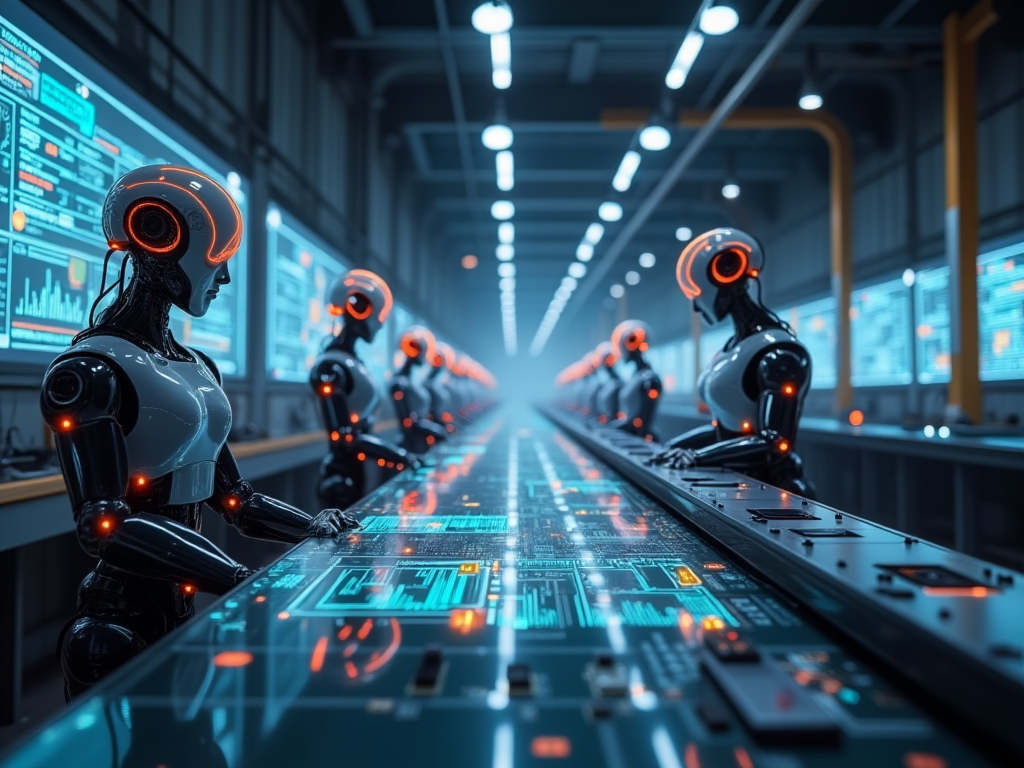
As Silicon Valley circles around ChatGPT and Gemini, China does something more substantial: It is constructing the AI-inclusive factories, robots, and supply chains that will shape the next decade. Hang on, forget chatbots. Think about all the warehouses that run without any human interaction, robots that do surgical operations somewhere in Nairobi or drones that control crops on the land measured in millions of acres. And that is where China is surging ahead in low-profile.
The statistics are not untrue:
- China has 40 percent of the number of industrial robots installed in the whole world of countries (IFR, 2024).
- The number of AI-enabled factories (i.e., so-called lighthouse factories as referred to by WEF) exceeds 8,500.
- Chinese robotics companies such as Siasun and DJI are beating U.S and European robotics enterprise in the emerging markets.
Why then is this not front page news? Since China dominance in AI is not based on glitzy demonstrations- it is based on large-scale application.
The Factory of the Future: AI, Automation, and the End of Cheap Labor
The manufacturing revolution sweeping China is not here, it is reality. Go to a Foxconn facility in Shenzhen today and you will encounter battalions of AI-controlled robotic arms which assemble iPhones with an degree of error that is almost non-existent. Human workers? They have simply become overseers, when they should be soldering circuits.
- Case Study: In Foxconn dark factory in Longhua almost no lights (or workers) are needed as the AI vision systems work even in the dark. Output? 20 percent more efficient and 90 percent less costs in labor than ten years ago.
By 2025, China aims to have 70% of its factories using advanced automation (MIIT).
“Dr. Linda Li, a supply chain professional consulted to both Tesla and BMW, says, “The West is talking about AI, China will turn it into assembly lines.” They do not only have an advantage over other companies in technologies; they are faster to use it.
But here is the stinger, it is not limited to the iPhones. China is now overhauling international production through its AI based plants, changing the game of global manufacturing whether it is textile or electric vehicles.
The Robotics Boom: China’s Homegrown Machines Go Global
China is selling its robots at a speedy rate, while the U.S. argues the ethics surrounding AI.
- The warehouses of Alibaba are currently filled with autonomous forklifts made by Siasun that can handle 1M+ packages per day with a success rate of 99.9 percent.
- The humanoid robots developed by UBTECH are being utilized in Saudi schools as well as in the campuses of Dubai airports.
- MicroPort surgical robots cost half as much as Intuitive Surgical Da Vinci system-and are already picking up steam in Africa and Southeast Asia.
What difference does this make? Since AI is the intersection of the physical world. But not only China is competing; it is also setting the standards.
According to Helen Toner (CSET),“ the United States is the leading country in AI theory, whereas China is the leading country in terms of practical implementations. They do not sit around waiting to get the perfect AI, they are sending out robots that are merely good enough and are making them better in the process.”
The Government’s Hidden Hand: Subsidies, Surveillance, and Scale
The Chinese AI supremacy does not happen by chance. It is the outcome of a playbook with both state subsidy, aggressive policy and ruthless focus on the use of industry.
- The equivalent of almost $150B+ in AI handouts (Brookings, 2023).
- complusive courses on AI in school to create a good workforce.
- AI-powered surveillance robots (like CloudMinds’ patrol bots) are now being exported to Russia, Iran, and Southeast Asia.
However, there is a twist; decreased America supplied chips due to sanctions are prompting China to become more innovative. The Ascend AI chips Huawei developed and even the 7nm breakthroughs of SMIC look like improvements, but are yet to-be compared with Nvidia.
The idea of China, says a Fortune 500 technology executive (who did not want to be named), is very straightforward: Saturate the market with cheap robotics, and then ruthlessly use scale to gain a tremendous advantage. West is negotiating policies as they are exporting robots to China.
The Weak Link: Where China Still Falls Short
Despite the wider strengths, the approach to AI in China has appalling gaps:
- Western chip (Nvidia, ASML) and sanctions dependency.
- Not keeping up in basic AI research The best discoveries largely continue to be made in U.S. labs.
- Quality control problems– not all Chinese robots can work in a high-precision environment.
As Dr. Kai-Fu Lee argues, what makes them leaders in the race is to acquire the good enough AI and not necessarily the best AI.
Conclusion: The Wake-Up Call for the West
Now, the sobering reality: In case Chinese owns all the robots that construct everything, who owns the future of manufacturing?
- To policy makers: You may want to invest in industrial AI- not just in chatbots.
- To enterprises: It is time to start monitoring Chinese robotics. In the near future, they will be found in your warehouses, hospitals and factories.
Last consideration: This is not an issue of AI. It has to do with who is making the physical world of tomorrow. China is that builder right now.
Your view? Is China superior in AI compared to the west? Leave your thoughts down here.